|
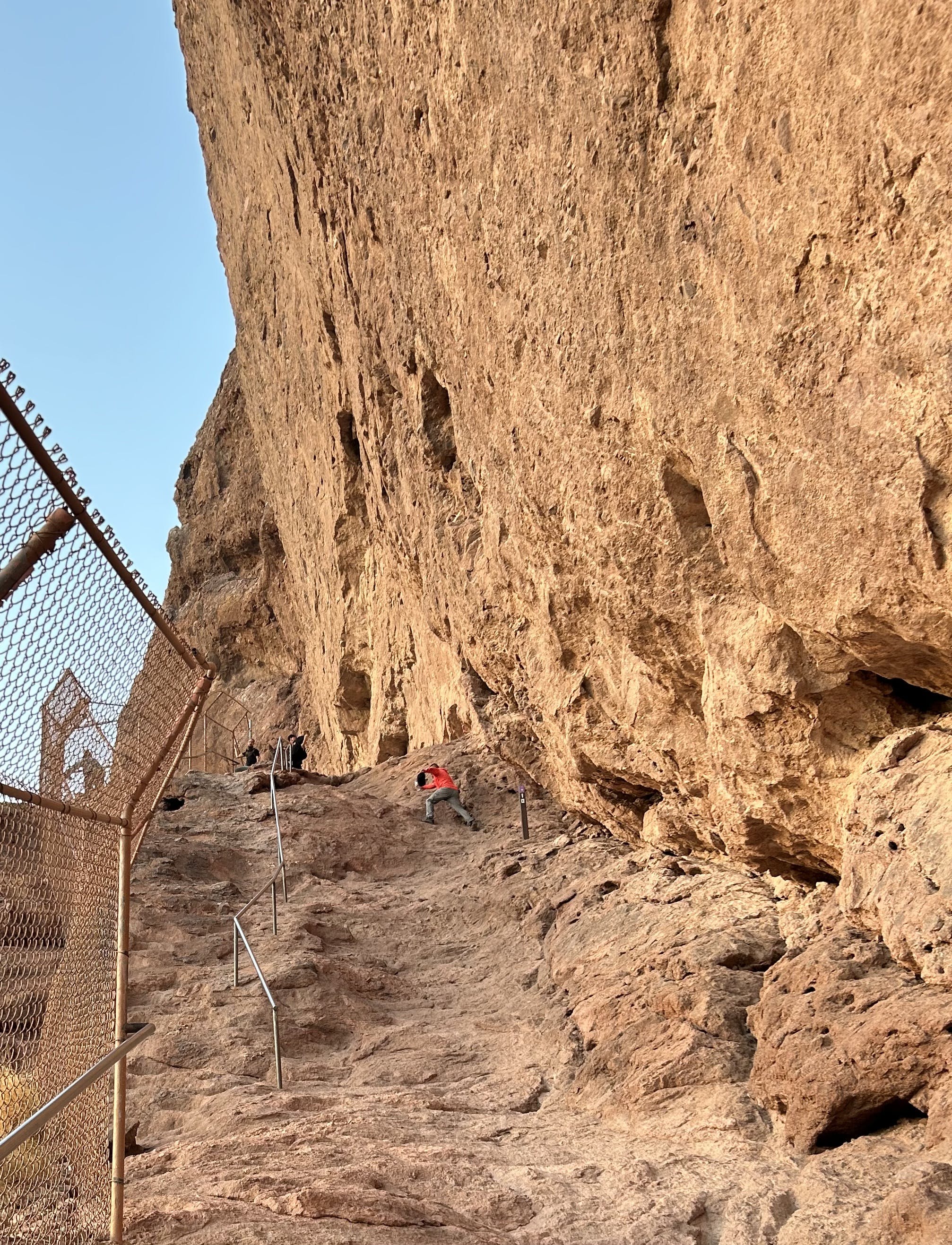
My husband and I (Carrie) visited Arizona recently; this was my first time in the state. We both enjoy hiking when we can get away. We stayed in Pleasant Valley and decided to hike Camelback Mountain. We left early in the morning and felt prepared with water, good tennis shoes, and a backpack with snacks. It was NOT a hike, by the way. It was a climb up a mountain. I knew it was serious when there was a placard by the trail warning of an experienced climber who had left the trail and fallen. This same sign labeled the trail from that point forward as a double diamond: extremely difficult. Naively, we decided to go forward anyway. It didn’t hit me how serious this
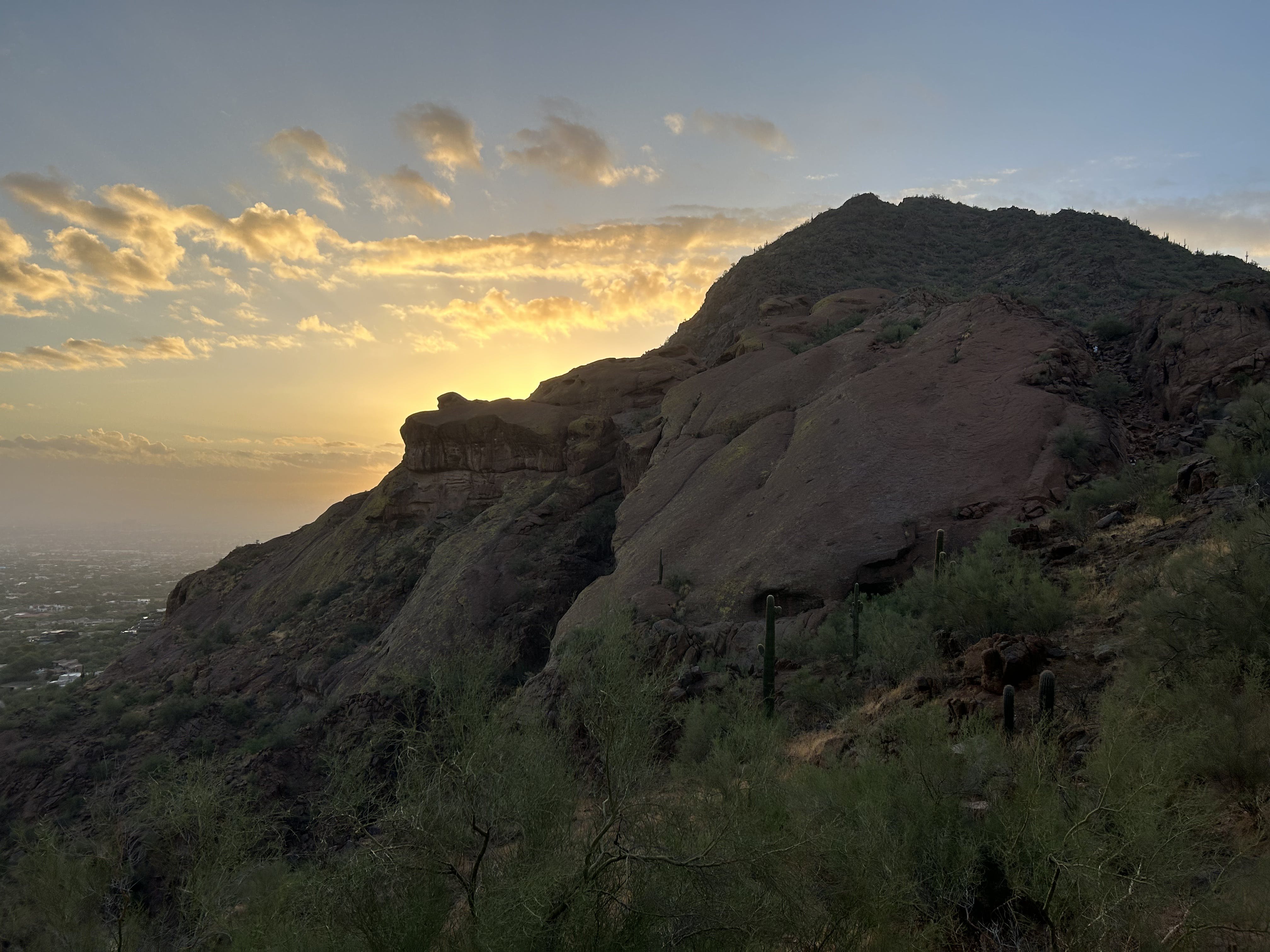
As we climbed, there were moments when my husband wanted to stop, look around, and take photos. I admit, I balked a little inwardly because I wanted to keep moving forward – conquer the task and then turn around and return to the hotel. Maybe I was afraid if I stopped, I wouldn’t make it to the top. At one point, we discussed turning around, but I was too competitive for that; I would make it to the top. Upon further reflection, I questioned myself: ‘What’s the point?’ If my only goal is to get a workout, but I’m not actually enjoying God’s beautiful creation, the conversation with my husband, or the climbing process, why am I doing this? About halfway up, the sun had risen, and the views were gorgeous. We snapped photos and greeted other climbers, including a dad with his 6-month-old puppy and his early elementary-aged daughter climbing in a dress. We saw experienced climbers, one runner who lapped us on the way down, and then we saw him again on our way up.
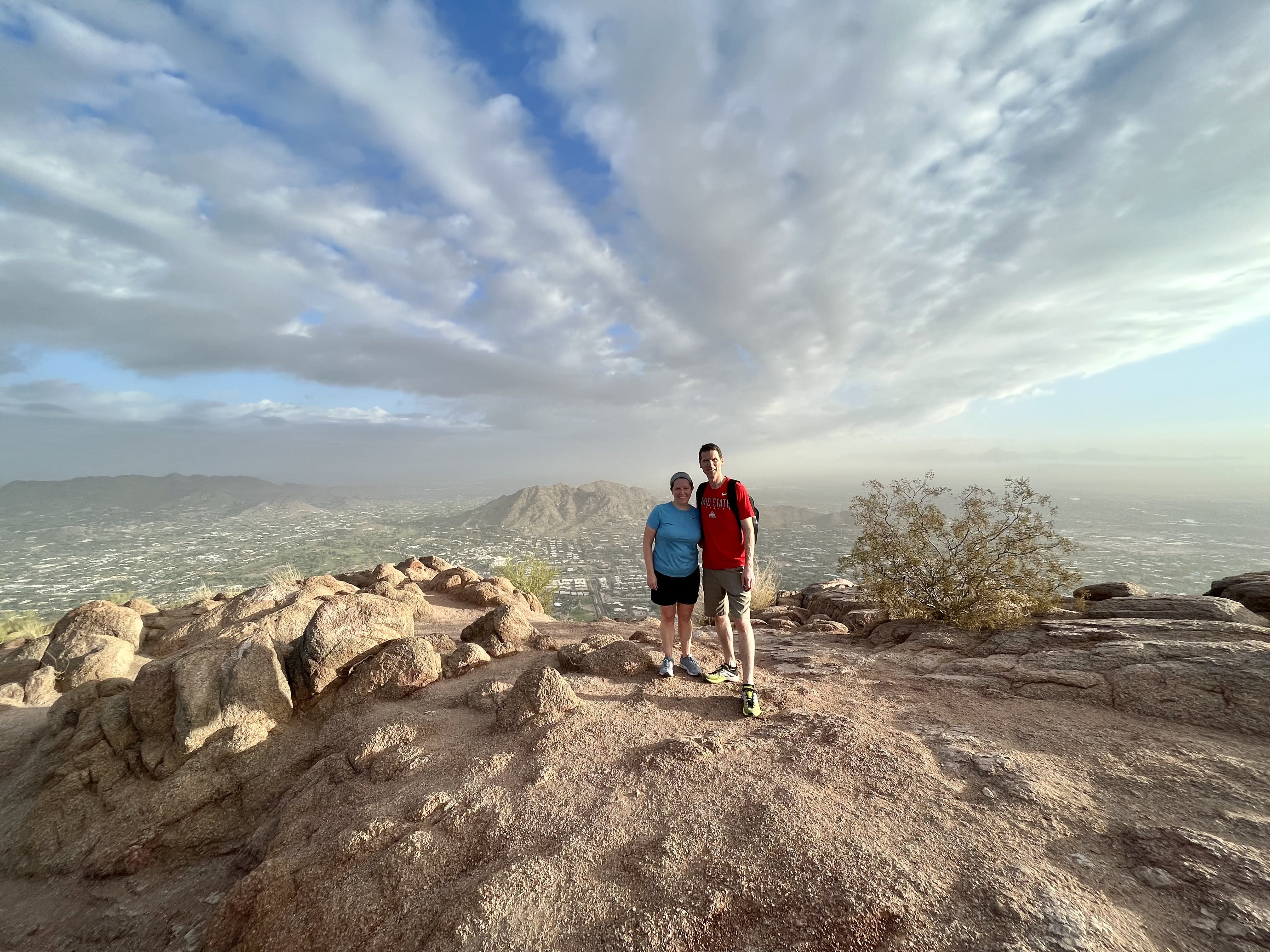
Once we reached the top, the views were similar. It was beautiful. You could see for miles. We snapped photos, drank water, and congratulated ourselves for reaching the peak!
Then, it was time to descend. In some ways, the descent was more difficult than the ascent because it required careful focus on where we placed our feet. We avoided gravel because of slipping (ask me how I know). We also had gravity’s downward momentum, repeatedly pulling our bodies to move faster than we desired. Once we reached the bottom, many fellow climbers attempted to begin their own journey upward. By this time of the morning, several park rangers were stationed at the trailhead, asking people if they had enough water or the correct shoes and warning them of the dangers ahead if they weren’t adequately equipped. Later, we learned that weekly, a helicopter has to rescue unprepared and unsuspecting people from the mountain. In retrospect, we could have used long pants, actual hiking shoes, and climbing gloves. It took us over two hours to make the round trip. Upon our return, of course, we shared our story with others, told them of the beautiful views, and what we would have done differently. In many ways, our climb is similar to disability and special needs parenting. It’s difficult, treacherous, and requires a lot of energy and mental fortitude. It requires evaluating what is needed to be long-term caregivers and advocates. We need equipment, sustenance, and a plan. What about caring for ourselves to know what we need or actively equipping ourselves with the right equipment (God’s word, friends, support)? Do we take the time after various experiences with our kids to evaluate what went well, what was beautiful in that experience, and what we would have done differently? Throughout our “climb,” it was important to pay attention to the guides, the signs, and those more experienced. It’s the same with this special needs journey. Don’t forget to reach out to those who may be a little further ahead in the journey. That’s where Sara, Amy, and I want to be an encouragement, support, and help. We can’t say this enough. How often do we take the time to connect with others along the way, sharing our experiences, the highs and the lows? Notice I didn’t say we are experts. You are the expert on your child! We are the experts on our own. Although our children might have quite different diagnoses, we have shared experiences, similar emotions, stories of times we fell and scraped ourselves and victorious overcoming. Suffering speaks a common language. Be willing to be vulnerable, to open up and share your story with someone else; you’ll never know the connection you can find. Lastly, how often do we approach this journey like I approached the mountain? Get through the pain. Conquer the task. Don’t stop to look at the views. Often, we forget to truly see the people around us – our families, spouses, and children. Our child is a task, a caregiving requirement to be completed, or a problem to fix. We often forget to appreciate the beauty in the middle of the rocks, gravel, sweat, and tears. Don’t forget to look for the beauty. Remember you’re planting seeds – seeds that have the potential to grow, flourish, and bring beauty to the world around you. |
Click here for a FREE download on tips to finding peace, hope & gratefulness in the hard places of being a special needs mom.